Your iPhone screen is not just a piece of glass. It is how you answer work messages, scan tickets, pay for groceries, watch videos, and keep up with family. When it cracks or stops responding, the genuine vs aftermarket iPhone screens question usually comes down to one thing: what repair gives you the right balance of quality, cost, and speed?
There is no single answer for every iPhone owner. A genuine display can be the better fit when original performance and resale value matter most. A high-quality aftermarket screen can make much more sense when you need a dependable, budget-conscious repair for a phone you plan to keep using. The key is knowing what you are paying for before the repair begins.
Genuine vs Aftermarket iPhone Screens: The Real Difference
A genuine screen is an original Apple display or a display made to Apple specifications and sourced through approved channels. Depending on the model and availability, it may be a new original part or a carefully refurbished original display. These screens are built for that specific iPhone model, including its display technology, brightness range, color calibration, and touch behavior.
An aftermarket screen is made by a third-party manufacturer rather than Apple. That does not automatically mean it is poor quality. Aftermarket parts come in several grades, from inexpensive replacement panels to premium options designed to closely match the original screen’s look and feel. The issue is that quality can vary more widely between suppliers.
That variation is why the cheapest quote is not always the best deal. A low-grade screen may get the phone working again, but it can bring dimmer brightness, weaker color, less responsive touch, or a display that does not hold up as well over time. A reputable repair shop should explain the part level being offered instead of treating every aftermarket screen as identical.
What You May Notice in Daily Use
For many people, the most noticeable difference is the display itself. Genuine iPhone screens are designed to deliver the color, contrast, brightness, and viewing angles Apple intended. On OLED iPhones, blacks should look deep and inky, while images retain strong contrast. On LCD models, colors and brightness should remain consistent across the screen.
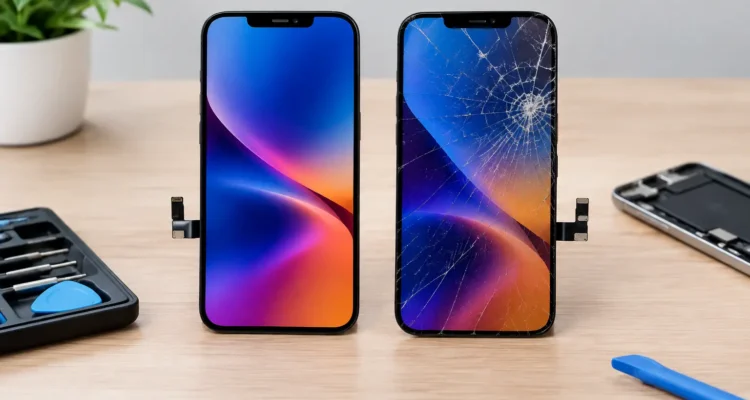
A premium aftermarket display can look very good in normal use. You may not notice a major difference while texting, checking maps, or scrolling social media. But side-by-side with an original screen, some aftermarket panels can appear slightly cooler, warmer, less bright outdoors, or less accurate with photos and video.
Touch response matters too. Your replacement screen needs to register taps, swipes, typing, and long presses without delay. Better aftermarket screens generally perform well for everyday use, while lower-quality panels may feel less precise around the edges or when you type quickly.
There can also be differences in battery use. An aftermarket panel that is not as efficient as the original display may draw more power, especially at higher brightness. This is not guaranteed with every replacement screen, but it is worth considering if your battery is already aging or you rely on your phone through long workdays.
Features That Need Extra Attention
Modern iPhones include display-related features that make the repair more nuanced than simply swapping glass. Depending on the model, these can include True Tone, adaptive brightness behavior, high refresh rate, and an always-on display. Genuine parts are the most likely route to maintaining the original experience, but correct installation and configuration still matter.
Some iPhone models may show an important display message after a screen replacement, particularly when the phone cannot verify the part or complete its pairing process. This can happen even when a high-quality replacement is installed. The message does not necessarily mean the screen is unusable, but it is something you should understand before authorizing the repair.
Face ID is another concern customers often raise. A screen replacement should not prevent Face ID from working when the repair is done carefully and the original components are handled properly. However, the earpiece and sensor assembly are delicate. This is one reason a trained technician and proper testing matter more than trying to save a small amount on an unknown repair.
A cracked screen can also affect the phone’s resistance to dust and moisture. Repair technicians can install replacement adhesive and take care during reassembly, but no screen repair should be treated as a promise that the phone is factory-waterproof again. If your phone has water exposure, mention it before the screen repair so the device can be checked for internal damage.
When a Genuine Screen Is Worth the Higher Cost
Genuine screen replacement is often the best choice if you have a newer, higher-value iPhone and want to preserve the closest possible original experience. It is especially worth considering if you use your phone for photography, design work, video editing, or any task where accurate color and display quality are important.
It can also be the better option if you plan to sell or trade in the iPhone soon. Buyers often look closely at display quality, warning messages, and whether the phone feels original. A genuine-quality repair can support the device’s value and make the phone easier to sell with confidence.
Choose genuine when you want the least compromise on screen performance and the price fits your budget. It is not always necessary, but it can be the right investment for a phone you expect to use for several more years.
When Aftermarket Is the Smarter Choice
A high-quality aftermarket screen is often a practical option for an older iPhone or a device that has already lost much of its resale value. If replacing the screen with a genuine part costs close to what the phone is worth, an aftermarket option can restore usability without putting too much money into the device.
It can also be the right fit when speed and affordability are your priorities. If your screen is shattered and you need your phone back for school, work, calls, banking, or family logistics, a quality aftermarket screen can get you back up and running without the cost of a premium part.
The important word is quality. Ask whether the aftermarket screen is a premium replacement, what display type it uses, and whether it is covered by a repair warranty. Some iPhone models originally use OLED displays, and installing a lower-cost LCD conversion can change the appearance and feel of the phone more noticeably. A clear repair quote should tell you what is going into your device.
Questions to Ask Before You Approve the Repair
You do not need to be a screen expert to make a good decision. Start by asking whether the quote is for a genuine part, a refurbished original part, or an aftermarket part. Then ask how the replacement compares in brightness, color, touch response, and expected durability.
It is also smart to ask whether the repair includes testing for touch function, cameras, speakers, charging, proximity sensors, and Face ID after installation. A screen can look perfect but still need a full functional check before you leave.
Finally, ask about warranty coverage. At ProPhonez, screen repairs are backed by a 30-day warranty, giving you time to make sure your replacement display is performing as it should. A good repair shop should stand behind both the workmanship and the part it installs.
The Best Screen Is the One That Fits Your Phone and Your Plan
The right choice depends on your iPhone model, how long you plan to keep it, how much display quality matters to you, and what you want to spend. Genuine screens are built for owners who want the closest match to their original iPhone experience. High-quality aftermarket screens are a sensible, cost-conscious way to keep many phones working well.
Before choosing, get a clear explanation of both options and avoid making the decision on price alone. A screen repair should leave you with a phone you can rely on when your day gets busy, not another problem waiting in your pocket.